 (713) 321-2424
 Consultation
Published on October 13, 2026 by Face Forward Houston
One of the most common questions patients ask; "Where are the scars for a facelift?"
The good news is that modern facelift techniques are designed to place incisions in discreet, natural locations so they heal as inconspicuously as possible.
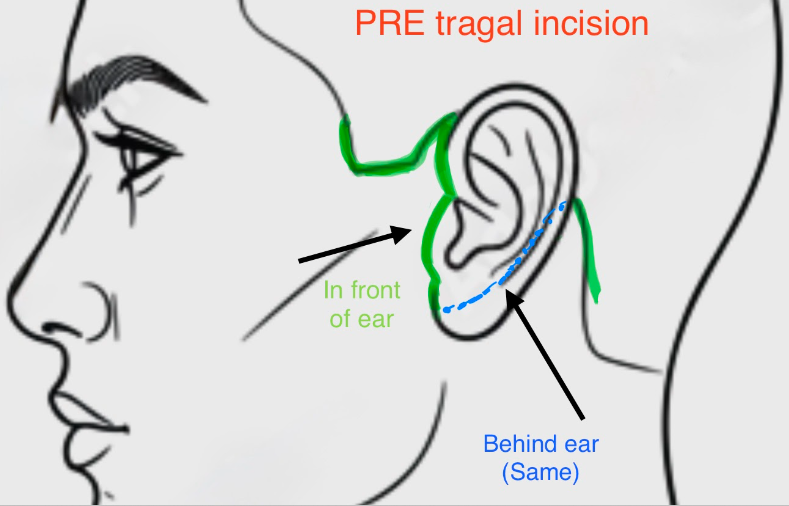
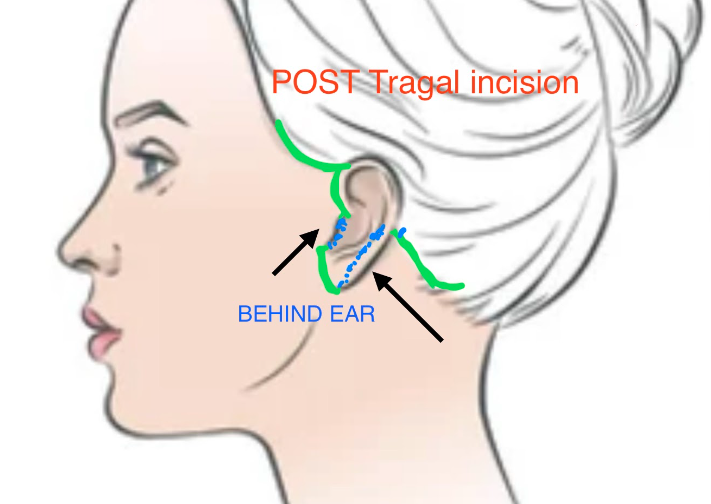
A common decision during Dr. Regina Rodman's facelift planning is whether to use a pre-tragal or post-tragal incision. While these terms may sound technical, they simply describe where the incision is placed in relation to the tragus—the small piece of cartilage that partially covers the opening of your ear. The incision can be placed in front this part of the ear, or behind it.
Every facelift incision follows a similar path around the ear, but the key difference is how it travels near the tragus.
A post-tragal incision is placed behind the tragus, allowing the scar to hide inside the ear. By following existing creases and curves, this approach helps break up the appearance of the scar, making it extremely difficult to notice once healed.
This is the approach most commonly used because it offers excellent scar concealment for many patients.
A pre-tragal incision, on the other hand, runs in front of the tragus before continuing around the ear. This incision might be preferred in patients who naturally have a deep crease in front of the tragus, have a tragus that sticks out, and in men. In the proper patient, this also can heal beautifully because it is placed within the ear's natural folds and contours.
The simple answer is no.
There is no universally "better" incision. Dr. Rodman determines the best choice depending entirely on your unique anatomy, facial features, and surgical goals.
An experienced facelift surgeon doesn't rely on the same incision for every patient. Instead, the incision is selected based on which option will produce the most natural-looking result while keeping scars as discreet as possible.
Several factors help Dr. Rodman Rodman determine the best fit.
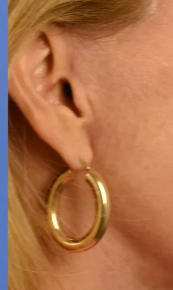
Patients with a naturally prominent tragus or a deeper crease in front of the ear may benefit from a pre-tragal incision, as the scar can blend nicely within those existing contours.

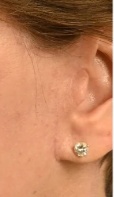
For many other patients, a post-tragal incision provides excellent camouflage by hiding much of the scar behind the tragus itself.

Men often require additional consideration. Because facial hair extends close to the ear, placing an incision behind the tragus can sometimes shift beard-bearing skin onto the ear—an unnatural result that Dr. Rodman aims to avoid. In these cases, a pre-tragal incision is often the better option because it preserves the natural beard line.
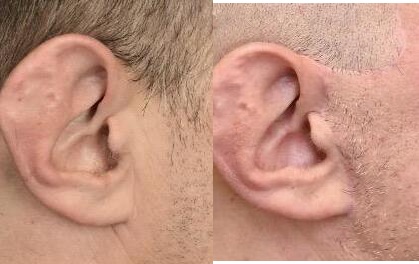
A successful facelift isn't just about tightening the skin—it's about creating natural, long-lasting results while minimizing visible signs of surgery.
For Dr. Rodman, that means every detail matters, including incision placement.
Rather than taking a one-size-fits-all approach, the best facelift plans are customized for each individual. Dr. Rodman will evaluate your anatomy, skin quality, hairline, and aesthetic goals before deciding which incision will provide the best balance of scar concealment and natural facial harmony.
At the end of the day, the question isn't whether a pre-tragal or post-tragal incision is "better." The real question is which one is best for you.
When carefully planned and expertly performed, both techniques can heal beautifully, allowing the focus to remain on your refreshed, natural appearance—not your scars.
Schedule Your Houston Plastic Surgery Consultation Today
The Face Forward process starts with a consultation. You will meet with Dr. Rodman (either in the office or via video call) to discuss the result or look you want to achieve. Dr. Rodman will review and educate you about your options and schedule you for the procedure of your choice. Follow-up appointments will be scheduled as necessary. Achieve your look and enjoy the new you! Schedule your consultation for plastic surgery in Houston at Face Forward today.
427 W 20th Street Suite 100, Houston TX 77008
Monday - 9am - 5pm
Tuesday - 9am - 5pm
Wednesday - 9am - 5pm
Thursday - 9am - 5pm
Friday - 7:30am - 3:30pm
